
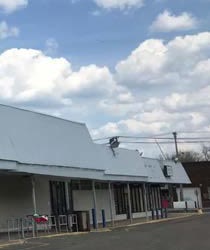
Emergency work needs a clear boundary.
For an occupied retail property, the first decision is how to reduce immediate water-entry risk without overstating what a focused repair can accomplish. This proposal centered on the identified leak area, preparation of the affected roof surface, repair-compatible materials and targeted sealant work where the documented condition required it.
Stabilizing one area is different from solving the entire roof.
A localized repair can be the right near-term response when it is tied to a defined condition. It should not be packaged as a full-roof warranty, a replacement project or proof that every part of an aging roof has the same condition. The owner still needs room to evaluate future restoration or replacement planning on its own merits.
Operations belong in the plan.
Retail tenants, visitors and staff make access, safety and disruption part of the roofing conversation. A good emergency scope identifies the area to be addressed while preserving the decision point for larger capital work after the immediate risk is controlled.
It records an emergency repair path issued for review. It does not claim that the repair was authorized, installed, warrantied or that a final system decision was made.
What Cleveland-area owners can take from this example.
An emergency roof proposal should tell you what will be stabilized now, what remains outside the repair boundary and what information is needed before a larger investment is approved. That separation makes the next decision easier to understand.